John McConell: The Story of a Scott County Civil War Veteran.

John McConnell soon after leaving the Union Army in 1866

John McConnell soon after leaving the Union Army in 1866

John McConell was born in Ayr Scotland in 1846. In 1849, soon after John’s birth, the family decided to move to the United States.

Drawing of Fort Ridgley, 1862

Drawing of Fort Ridgley, 1862

Like many other immigrant families of the time, they initially settled on the East Coast, and then moved West, lured by the prospect of land ownership. The McConnells settled in Pennsylvania, then traveled to Iowa and Illinois, eventually coming to Minnesota in 1854.

When the family arrived in the area they settled at Fort Ridgley. The encampment had been built a year earlier in 1853, in response to the treaties of 1851 between the Dakota and the United States. Fort Ridgley’s goal was to ensure that Dakota lands became available for resettlement by Europeans and Americans.  John McConnell’s father was employed by the military to build boats and run the sawmill for the fort.

After two winters at Fort Ridgley, the family moved to Blakley Township with the goal of starting a farm. These plans were waylaid by the outbreak of the Civil War. In 1862, John McConnell’s father enlisted in the 8th Minnesota Regiment.  At age 17 in March of 1863, John McConnelll Enlisted in the Third Company of the Minnesota Volunteer Calvary, later known as Brackett’s Battalion. He served until the end of the war.

Brackett’s Batillion was made up of men from the First, Second and Third Companies of the Minnesota Volunteer Calvary. Alfred Brackett was the captain of the Third Company.

Brackett’s Battalion, 1864

Brackett’s Battalion, 1864

During their first winter of service, the companies were stationed at Benton Barracks near St Louis Missouri. Due to weather and poor sanitation, many of the men fell ill. In February of 1862, the struggling company was assigned to garrison duty in the hopes of improving their health and training. They garrisoned at Forts Henry and Heiman in Tennessee for over a year.

During this time, they were employed in riding to escort prisoners and deliver information. They also repaired telegraph lines, and scouted for opposing forces. There were occasional skirmishes with Confederate guerrillas.

In June and July of 1863, the regiment participated in the Tullahoma Campaign. In little more than a week the Army of the Cumberland drove Confederate forces out of middle Tennessee.

In January of 1864, the unit was sent home on a thirty day furlough. Because of on-going conflicts with the Dakota in the aftermath of the U.S.-Dakota War of 1862, Brackett and Governor Alexander Ramsey arranged for the cavalrymen to be reassigned to the Department of the Northwest. The veteran soldiers were reorganized into a new battalion. Major Brackett was given command, giving the unit the official name “Brackett’s Battalion.”

Brackett’s Battalion, 1864

Brackett’s Battalion, 1864

Brackett’s Battalion began the second chapter of its service in February of 1864. The unit joined General Alfred Sully’s army for the Northwestern Indian Expedition into Dakota Territory. The expedition was the continuation of a punitive campaign against the Dakota begun in 1863. It was also an effort to remove Dakota people who were living in areas that blocked access to gold that had recently been found at the Missouri headwaters. During this time John Mcconnall fought alongside his father who had also been stationed in the Western part of North America. The battalion spent the winter of 1865, ironically, at Fort Ridgley. In May and June of 1866, the men were finally mustered out.

John McConell returned to Minnesota where he lived out the remainder of his life as a farmer. He was active in the Grand Army of the Republic, or GAR, a nationwide veterans’ organization for Civil War soldiers.

Written by Rose James, SCHS Program Manager

What's It Worth?

20080050406.jpg

We received calls on a pretty frequent basis about the worth of certain items. It makes sense, if anyone would know the value of something historic it would be a historical society, right? We don’t necessarily know the value of things, more accurately; we are not allowed to give that information out even if we do. It might seem weird, but the value of items can get a historical society into some pretty tricky waters. If we assigned a value to something, and then let you write it off on taxes, we both get in trouble. Beyond that, it gives us a degree of power we just shouldn’t have.

Consider, for a moment, if you had a gold necklace and you brought it in for appraisal by a historical society. Well, if it had massive historical value, that organization could tell you it’s worth less than true value to try and convince you to donate it. This is highly unethical, and at the end of the day that’s the point. Historical societies, like ours, are guardians of the past. We hold everything in Public Trust, which is exactly what it sounds like, the Public trusts us to take care of these items. We want to honest and straight forward, and put forward the best ethical foot we can. This leads to the follow up question we always get asked, “Do you know someone who can tell me?”

We generally do not give out appraiser’s information for much the same reason that we do not give appraisals ourselves. It is easy for people to make deals and agreements to undervalue items to encourage their donation or sale. We do not want to appear to be making deals, and we always encourage donors to seek an appraiser on their own. If a donated item has an appraisal, we will honor that value, but we do not assign any value ourselves to items we take in.

Written by Dave Nichols, Curator of Collections

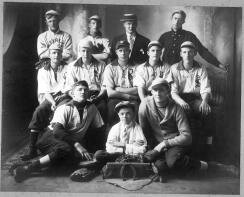
One Last Chance for The Old Ball Game!

19980450001.jpg

Baseball in Scott County is a tradition; nearly every town has or had a small town baseball team. Shakopee, Jordan, and New Prague all pride themselves on not only their teams, but the parks in which they play. Ross Bernstein is quoted as saying that “In small-town America, being on a team was like being royalty”. Some of the names of players like Joe Schleper and John Breimhorst became household names.

20020470001.jpg

Baseball in the County goes back as early as 1898, and even earlier by some other accounts. By the turn of the century the weekly game’s score were reported in every newspaper, and fans flocked to the stands. City built massive parks and competed to have the best facilities. Baseball in the towns of the county remained a main stay until the 1960s, when attentions turned toward more professional teams. The growth of major teams, the money they could spend, and possibly the rise of highways began to see small town ball die out in many towns.

 Today, many towns still have teams, and they compete in statewide amateur leagues. The history of baseball in Scott County is as much a part of this county as anything. While the history cannot be covered in one blog post, a much more expansive history can be found in our current exhibit, Play Ball: Sports in Scott County. The museum will be closing December 1st, and so will this exhibit, so be sure to come in before it closes and learn more about the celebrity players, ball parks, and general stories of sports in Scott County.


Written by Dave Nichols, Curator

Prohibition Through the Years

Prohibition was not a popular edict in Scott County. With large German and Czech populations, Scott County resisted the closing of breweries and saloons- often used as community gathering spaces. We think of prohibition as a time of glitzy parties, slick gangsters, and glamorous speakeasies. In Scott County, residents were far more likely to share a clandestine bottle with friends, or stash a small still in the barn to supplement farm income. As prohibition grabbed headlines, life went on.

Below, find a selection of Scott County photographs from Scott County for each year that Prohibition was in effect, as well as selections from the papers that show how Prohibition impacted the county.

1920

American Range Workers, Shakopee, 1920. Photo from the SCHS collections.

American Range Workers, Shakopee, 1920. Photo from the SCHS collections.

Group in Belle Plaine, 1920. Photo from the SCHS collections.

Group in Belle Plaine, 1920. Photo from the SCHS collections.

Ice Skating on the Minnesota River near Shakopee, 1920. Photo from the SCHS collections.

Ice Skating on the Minnesota River near Shakopee, 1920. Photo from the SCHS collections.

Shakopee Tribune, July 9, 1920

Shakopee received an unheralded visit from federal prohibition enforcement officers Saturday evening and as a result MJ Doherty, local saloon men, appeared before HF Price, prohibition enforcement chief in Minneapolis on the charge of having moonshine liquor on his premises. Doherty said he bought the liquor and admitted to having colored the liquor and placed it in bottles. His case was taken under advisement.

Shakopee Argus, July 30, 1920

A raid of Ed Thiede’s saloon Wednesday morning about eleven o’clock was staged with a number of features that the proprietor claims were unnecessary and not in keeping with the usual conduct of federal officers… Mr. Thiede claims that the men, three in number, entered his saloon while he was engaged in counting money and that, without displaying their official badges or stating what their errand was, they ordered him to step out from behind the counter…one of the men advanced around the counter toward him and he backed away, upon which a second man jumped over the counter and struck him in the face …at the same time applying vile epithets to him… the men searched the saloon, basement and kitchen but found no liquor.

Jordan Independent, August 26 1920

A gasoline stove, a milk can, two barrels filled with soaking barley and other indications that certain forbidden drinks are being manufactured are not sufficient reason for anyone other then the owner to destroy property. William Kohler, a farmer, was soaking feed for hogs, he told the court. Leo Meyer thought he was violating the prohibition act. Mayer destroyed the ‘hog feed’ and the court fined him $20, the amount of damages asked by Kohler.

1921

Wedding in Belle Plaine, 1921. Photo from the SCHS collections. 

Wedding in Belle Plaine, 1921. Photo from the SCHS collections. 

Amanda Messerbank of Jordan, 1921. Photo from the SCHS collections.

Amanda Messerbank of Jordan, 1921. Photo from the SCHS collections.

View of the Minnesota River near Shakopee, 1921. Photo from the SCHS collections. 

View of the Minnesota River near Shakopee, 1921. Photo from the SCHS collections. 

Shakopee Tribune, March 24 1921

Another raid by Federal Agents was made here last Saturday afternoon… The victim of the raid was Linus Vierling at whose place it was reported that quite of quantity of moonshine and home brew was found by federal agents and destroyed… The open violation of the laws of the United States in regard to liquor has passed the joke stage and it is time for the citizens of Shakopee and Scott County to awaken to this fact.

Belle Plaine Herald, Sept 1, 1921

 Prohibition enforcement officers have been busy in Scott County the past few days. Stills southeast of Shakopee were raided Saturday and the owners arrested . On Monday raids were carried out in Jordan and Shakpoee, retail dealers being arrested, two in each town.

Shakopee Tribune, Oct 13, 1921

Prohibition will lengthy lifespans by 4 years said a temperance speaker… It will seem that much longer anyway

1922

Shakopee High football team, 1922. Photo from the SCHS collections 

Shakopee High football team, 1922. Photo from the SCHS collections 

St Mark’s graduating class, 1922. Photo from the SCHS collections. 

St Mark’s graduating class, 1922. Photo from the SCHS collections. 

Jordan Independent, March 9, 1922

In a very well attended meeting at the Jordan Commercial Club held at the City Hall last Thursday night the rejuvenated organization showed a very lively spirit and interest in public affairs… A resolution related to prohibition was introduced. It was a statement asserting that prohibition is a failure and calls upon Congress to enact such legislation ameliorating the terms, conditions and provisions of the Volstead act…the action was passed without any dissenting votes.

Jordan Independent, June 1, 1922

It is reliably reported that a prohibition enforcement squad raided Belle Plaine last Saturday and caught every soft drink dealer excepting one with illicit liquor.

1923

Produce House in Belle Plaine, 1923. Photo from the SCHS collections. 

Produce House in Belle Plaine, 1923. Photo from the SCHS collections. 

Young man standing outside a home in Shakopee, 1923. Photo from the SCHS collections.

Young man standing outside a home in Shakopee, 1923. Photo from the SCHS collections.

Shakopee Tribune, May 24 1923

“Bootleger Fooled when he Buys Tea for Liquor” says a headline. It’s a mean man that would swindle a poor bootlegger.

1924

Katherine Wolf Deutsch of Jordan. Photo of the SCHS collections. 

Katherine Wolf Deutsch of Jordan. Photo of the SCHS collections. 

Store in Shakopee, 1924. Photo from the SCHS collections. 

Store in Shakopee, 1924. Photo from the SCHS collections. 

Shakopee Argus, Nov 6, 1924

In the good old days it took years for a man to drink himself to death, but the modern man can catch up to him with a few swigs out of a bottle of moonshine

1925

DeMers Family, Shakopee, 1925. Photo from the SCHS collections.

DeMers Family, Shakopee, 1925. Photo from the SCHS collections.

Family driving in the Shakopee Fourth of July parade, 1925. Photo from the SCHS collections.

Family driving in the Shakopee Fourth of July parade, 1925. Photo from the SCHS collections.

As Prohibition went on, Scott County newspaper headlines begin to take a darker turn. Gone are the quips about low-stakes arrests. Instead the focus turns to some of the real problems associated with moonshine. Health concerns and driving safety are at the forefront of the conversation. 

March 19 1925, Belle Plaine Herald

“ A judge fined a man $200 and ordered him to the work house for 6 months for driving an auto on the street when he was so drunk he could scarce remember his name… personally we never like to see anyone in trouble with the law, but this thing of driving an auto while intoxicated is becoming a problem too serious to overlook…the public streets and public roads of this county must be made safe”

1926

August Herman, August Zaun and Alfred Zaun in Belle Plaine, 1926. Photo from the SCHS collections.

August Herman, August Zaun and Alfred Zaun in Belle Plaine, 1926. Photo from the SCHS collections.

Shakopee Argus Tribune August 19th, 1926

Driving an automobile on our congested roads is a man-sized job for anyone who has a clear brain, and the moon-fogged fellow at the steering wheel has no business in any car…the automobile is a mighty dangerous weapon in the hands of one of these fellows. An uninvited guest always sits beside the drunken driver: The Grim Reaper.

1927

Genevieve McHugh of Shakopee, 1927. Photo from the SCHS collections.

Genevieve McHugh of Shakopee, 1927. Photo from the SCHS collections.

Shakopee Argus Tribune, June 16, 1927

As a rule the drunken driver only wants one side of the road. Unfortunately It is your side.

1930

Arthur Bohnsack and Evelyn August in Belle Plaine, 1930. Photo from the SCHS collections.

Arthur Bohnsack and Evelyn August in Belle Plaine, 1930. Photo from the SCHS collections.

April 4, 1930, Jordan Independent

“Americanism versus Prohibition” was the general title given to a forum discussion at a mass meeting conducted in Mertz hall in Jordan Tuesday Night… Mr Richter explained that the purpose is to bring about a solution to the problems and perplexities that they charge to the Eighteenth Amendment.

1932

Kenneth Shaughnessy of Belle Plaine, 1932. Photo from the SCHS collections.

Kenneth Shaughnessy of Belle Plaine, 1932. Photo from the SCHS collections.

Belle Plaine Herald, Feb 11, 1932

From “Argued Prohibition 50 Years Ago”- a Republican Party article

…Ten years ago the German vote was stronger in Scott, although the situation is probably the same today. But now we hear little complaint about prohibition from the Germans; they seem to get along without brewery beer just as well as the other nationals. Of  course, a few may make a little home brew on the side, but so do the Irish, French, Yankees and the others. Perhaps if pioneer legislators knew what was in store for their successors they would have settled the liquor question once and for all. If they had banned the liquor traffic, most of us would probably have little knowledge or desire for intoxicants. We are working towards it, but with the present method of enforcement the day of real and total abstinence seems a long way in the future. 

Shakopee Argus Trib, November 3, 1932.

From an advertisement for the Democratic party

Repeal Prohibition: Bring back Beer and Light Wines. That is the Democratic ticket. It is a vote for a repeal of the 18th amendment, It is a vote for the modification of the Volstead Law

1933

Capture.JPG
1933.png

 As you can see from the numbers to the left, Scott County voted solidly for the repeal of Prohibition in 1933. 

Belle Plaine Herald, April 13, 1933

The new beer industry got off to a flying start in Belle Plaine last Friday. A suppl was at hand early in the morning and all the licensed retailers had a supply that looked big enough to meet any demand… however by mid afternoon the supply was exhausted. So many wanted to renew acquaintance with brewery beer after the long 14 year drought that it looked as if folks would have to be put on the quota basis.

New Prague Times, June 11, 1933

New Prague’s Brewery will be remodeled. Today marks the first activities in the awakening and rejuvenation of an important New Prague industry that has been dormant for some years.

Shakopee Argus Tribune, July 20, 1933

Brewery details are near completion. Present plans provide for converting the old flour mill here into a modern brewery the capacity of which has not been disclosed… men in close contact with the undertaking have much enthusiasm and express confidence in its successful outcome.

Compiled by Rose James, SCHS Program Manager

Hats Off!

Written by Connie Trussel of Elko for “As I remember Scott County History”, 1908

Susan Hartz of Shakopee, 1908. Photo from the SCHS collections.

Susan Hartz of Shakopee, 1908. Photo from the SCHS collections.

Many fond memories are associated with wearing hats, although a few of the memories are bitter. Most families in Scott County were hard working and frugal. A new hat for Easter was not a frivolity or extravagance but a necessity. Women often exhibited unique and clever ways to fabricate a “new” hat. One example is the mother who dyed her daughter’s last year’s hat with black stove polish, which produced a lovely, shiny finish. The daughter still remembers feeling quite elegant at church that Sunday. Fortunately it didn’t rain.

Another hat story that still get s a chuckle is the pre-Easter shopping trip by four local women to Fairbault to buy new Easter hats. Three of them quickly decided on new creations that suited their tastes and their pocket books. The fourth lady was quite undecided. She tried hat after hat form the shelf, always coming back to one that lay near the mirror.  Finally satisfied that it was the most becoming, she announced her decision. Only then did one of her companions speak up and tell her that it belonged to her, and was her old hat which she had taken off and laid down.

Shakopee women in hats. Seen in the back row from left to right are: H. E. (Lena) Strunk, Gertrude Weiland, Anna Dieken, and Anna Berens. Seen in the front row from left to right are: Hulda Weiland and Isabel Strunk. Photo from the SCHS collections.

Shakopee women in hats. Seen in the back row from left to right are: H. E. (Lena) Strunk, Gertrude Weiland, Anna Dieken, and Anna Berens. Seen in the front row from left to right are: Hulda Weiland and Isabel Strunk. Photo from the SCHS collections.

I’m sure this incident happened many times, but it’s still with chagrin that it is remembered. After hours of trying hats to find just the right one, a lady walked proudly into church on Sunday morning. To her horror, she noticed that someone else had bought exactly the same hat! Needless to say, that hat was never worn again.

A cruel remark, possibly even made jokingly, prompted one lady to immediately go home and burn her new hat. She wasn’t going to take a chance on that ever happening again.

Lois H. Kahle of Belle Plaine, 1884. Photo from the SCHS collections

Lois H. Kahle of Belle Plaine, 1884. Photo from the SCHS collections

One of the funniest hat stories is about a man and his new hat. Years ago, before the advent of the feed and seed advertising caps, men wore hats too- morning, afternoon and evenings. One Saturday night, as was their custom, a young couple decided to spend the evening at the local bar. Above the bar was the dance hall. After a few

Meeting of the Shakopee Goodfellows, 1884. Photo from the SCHS Collections.

minutes in the dance hall, the man deserted his wife, to engage in conversation with his cronies at the bar. The young wife had come to dance, so when a good-looking young man approached the group of young ladies, inquiring which ones were married. She didn’t object when her friends all answered “I am but she isn’t”. The handsome stranger, while making conversation between dances, informed her that he was wearing a brand new and very expensive hat. They were dancing again, he still with his hat on, when the young lady’s husband returned. The husband, feeling a surge of jealousy, strolled over to the couple, grabbed the man’s hat, stamped on it a few times, and placed it back on the startled man’s head. Not sure what to do next, the couple kept on dancing. Where upon the angry husband again took the hat and promptly threw it in the stove. At that point, the stranger decided enough was enough. He hurried out of the dance hall and wasn’t seen in town again.

Young people walk through downtown Shakopee, 1900. Photo from the SCHS collections.

Young people walk through downtown Shakopee, 1900. Photo from the SCHS collections.