Bandits and Bank Robbers

In October of 1929 the stock market crashed in the United States. This financial disaster led to a worldwide recession, and the United States entered The Great Depression. This was a difficult time for most Americans, and while some had little choice but to grit their teeth and bare it, others took to a life of crime to get by. In Scott County, the months following the stock market crash saw a rash of bank robberies and heists throughout the county.

In November of 1929, the First State Bank of Savage was the first to be hit by a crew of robbers from St. Paul. The thieves were eventually caught and tried, but not before making off with over $1200 in cash and bonds ($18,000 in today’s dollars). Shortly thereafter, the First National of Bank of Shakopee was robbed, though this time by a different group of thieves. Here they made it away with $5997 (or 89,811 today). This second crew wasn’t content with their massive haul though, and on December 9th 1929, they struck again at the First National Bank of Shakopee.

The increase in violence and robberies (both bank and in private homes), had put the people and police on high alert. An early tip informed the police that the thieves were on their way, and so the police set up a look out. When he didn’t come out after the appointed time, they knew the heist was in progress. This second crew was gunned down by police and locals, though all of the robbers survived. They had taken $1500 from Shakopee’s vaults (some $22,400 nowadays). All three robbers went to try and were sentenced to prison.

Scott County has an interesting history during the 1920s, from bank robbery, to speakeasies, to rum running. In the decades that followed, Shakopee in particular would gain the nickname of Little Chicago due to its gambling parlors. IF you want to know more about the bank robberies, check out our exhibit case at the Scott County Courthouse. One of our recent interns, Ben Malacko, did a whole small exhibit on the matter. We also have Prohibition coming soon to our main gallery. If you have any prohibition stories from the county, or would be interested in placing any Prohibition era items on loan as part of the exhibit, please give us a call or email Dave Nichols.

Written by Dave Nichols, Curator of Collections

Research Conducted by Ben Malacko, Exhibits Intern

Tales of a Mail Carrier in the Early 1900s

Written by Joan Muehlbauer and Corrine Meierbachtol, from “As I Remember Scott County”

Tom O’Connor delivering mail in Belle Plaine, 1905. Photo from the SCHS Collections.

Tom O’Connor delivering mail in Belle Plaine, 1905. Photo from the SCHS Collections.

Our dad, John McDevitt, started his mail carrier job in 1903. He had three horses. In the summer, he had a two wheel buggy. When the water was high in the spring, he would have to leave his horses at the last patron’s house- he would also have to spend the night there. When I was a little girl, I remember how unhappy this made me when he couldn’t come home. He would call up and talk to me, and it would be ok. If the current in the river was not too swift, the mail could be brought over in a boat to him. In the winter, he would travel in a cutter drawn by one horse. A large stone as placed in the oven of the cookstove overnight and in the morning the stone was wrapped in burlap and kept near his feet. He wore a heavy sheep-lined coat. A nice warm horse hair blanket covered him. All was fine unless she had to go over high snow drifts, which many times tipped over the sleigh.  He had to be at the post office at eight thirty in the morning to sort the mail. Then he came home and had a hot bowl of soup. The only lunch he took was thermos of hot coffee, and he left for his route at 10 o’clock. The route was 30 miles long, and in good weather he was home around three. In winter he was later. 

The first car he bought in 1925. It was a Model T Ford. When we were old enough, we were taken with him on the route to keep him company. He was a mail carrier form 1903 to 1932. He died September 27th, 1936.

Leaves, S’Mores, and More

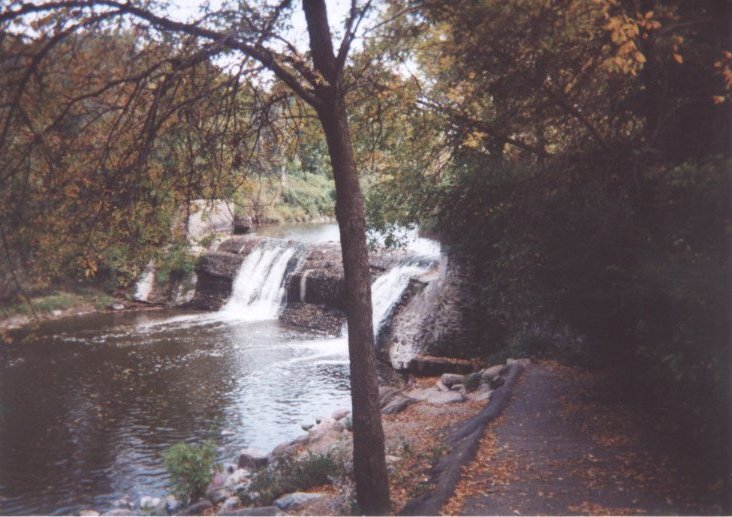
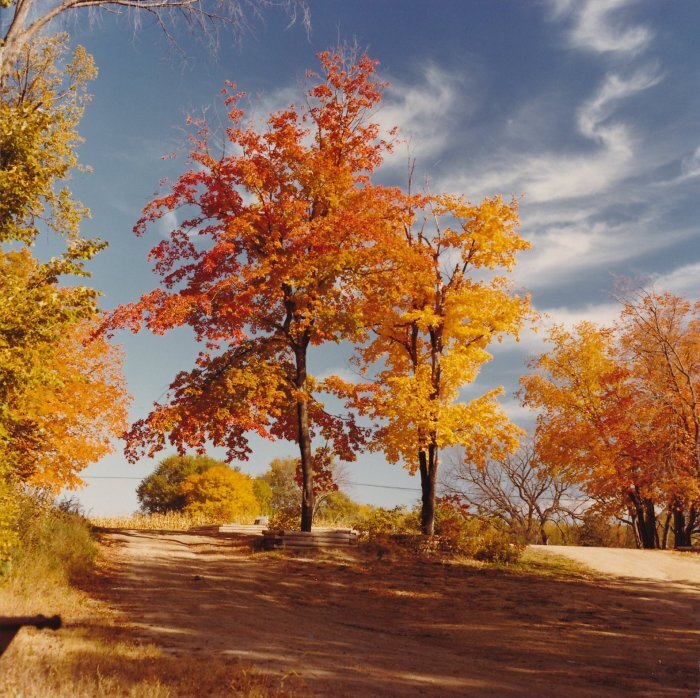
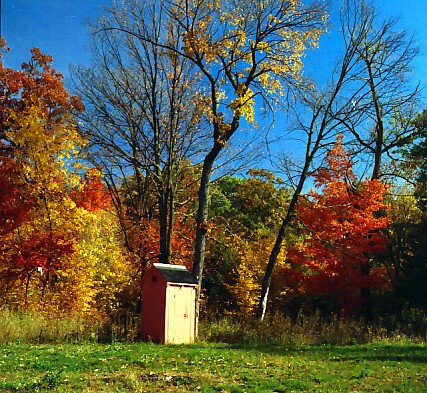
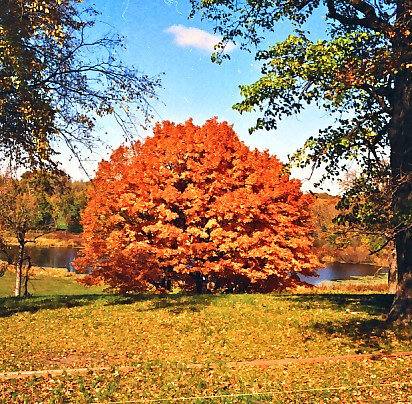
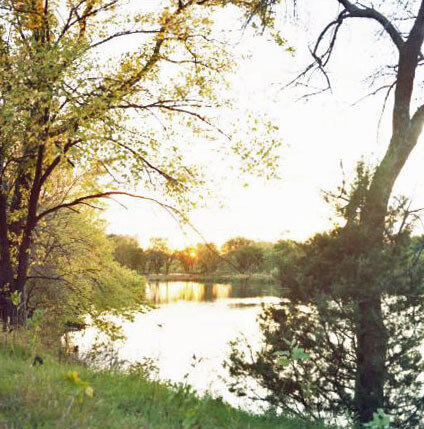
Its that time of year again, a time when the trees change their colors, days get colder, and the nights get longer. Its fall in Scott County, though the recent weather might have some of us confused. Despite unseasonable weather fall is here, and for a few days now actually (the first day of fall is officially September 23rd). Fall is my favorite season of the year, it’s a season of bon-fires with friends, strolling down leaf covered sidewalks with my wife, and camping. My family always seemed to go camping later in the year than everyone else.

The weather lately has been warmer, muggier, and generally unfall-like. Still, I wanted to give everyone a glimpse of our past (and future) with a photo gallery of Scott County in Fall. Look forward to these images in a neighborhood near you, soon!

Written by Dave Nichols, Curator of Collections

Prohibition in Scott County

19960070017.jpg

In January 1920, Prohibition started and the nation would never be the same. Minnesota as a whole was in favor of prohibition; in fact the guidelines for it were put down by a Minnesota Congressman, Andrew Volstead. In Scott County, however, Prohibition was far from favored. It’s no surprise that the heavy German population in the county would be opposed to the law. In fact, prior to 1917 and World War I, Germans made up a large front in the anti-prohibition movement.

Jordan was a hotbed for Volstead violations during prohibition. Even those who were supposedly following the law often found themselves caught for selling liquor. In raids in the early 1920s, Jordan had the entirety of the soft-drink bar owners cited for violations. Soft-drinks are not necessarily the soda pop we think of today, it also included mixed drinks with things like simple syrups. As early as 1922, the Jordan Commercial Club sent a message to the US Congress demanding Prohibition’s repeal.

Jordan was not the only source of violations in the county. Shakopee had its fair share, and even New Market had a famous incident reported in in 1921. The story goes that a New Market man had made so much moonshine in the year and half since Prohibition that he had earn $16,000, that almost $250,000 today. It’s no surprise then, that not long after a night at the bar of him bragging of his success that the Prohibition agents raided his farm.
Raids in Scott County became quite frequent, occurring at least once a month in the early years and then becoming about a bi-monthly occurrence in the later years of Prohibition. A report in 1921 from the Jordan Independent mentioned a raid in March of that year that took Prohibition raids from a joke to a very real reality.

Prohibition impacted the county in many different ways, from the changing of livelihoods, to the increase in technically criminal activity; one could say Scott County is a good test case for the impact of Prohibition as a whole. If you want to learn more about how the county weathered the 18th Amendment be sure to visit us when we reopen in the spring for our new exhibit on the subject.

Written by Dave Nichols, Curator of Collections

An Update to Our Collection Donation Policy

We have recently updated our collections donation policy, and this seemed like a good way to reach a large majority of people. First, a recap of how our old policy worked. In the past we welcomed individuals to bring in donation for the staff to evaluate off the street or by giving us a call/email ahead of time. If the items we accepted into the collection we would send you deed of gift paper work to be filled out and returned. If the items we not accepted we would notify you and ask you to retrieve them.

While this system worked well for us in the past, we realized that many donations were set for return and we hampering our ability to care for those being accepted, as well as caring for those yet to be collected by donors. We want to ensure that all items that come through our doors can receive the best care possible. In order to make sure that can be accomplished; we have made a change to our donation policy as follows. We are no longer accepting walk in donations off the street. We ask that those looking to donate items to us always contact us first.

The goal of this change is two-fold: 1) We want to make sure that we have the space and means to care for everything in the building without causing harm to other items or staff, 2) If we decide that an item does not fit our collection, this saves the donor the hassle of pulling the item from storage and hauling it to the museum only to have to take it back to their home at a later date. We encourage donors to provide pictures and any background information on donations when contacting us. If donations are accepted we will still be sending out deed of gift information to be filled out. As always, if an item doesn’t fit our mission and collection we are happy to provide names and contact information for organizations which might be interested in the items.

We hope this change to our policy will make the donation process easier for everyone going forward; and we appreciate everyone’s understanding as we implement this change. If you have any questions regarding the change please give us a call and we will be happy to answer any questions you may have.

Written by Dave Nichols, Curator