History of Mudbaden: Part 1

20070430001.jpg

A Smelly Swamp 

Local legend has it that when Ole Rosendahl went to claim a homestead near Sand Creek township, only a single 80 acre tract of land was left. Supposedly the land was covered with smelly, swampy mud, and no one thought the property had any practical use. Nonetheless, Rosendahl claimed the land and began to build a home on the property.  

As Rosendahl remembers it, sometime around 1900 a peddler was crossing his land and got stuck in the mud. He noticed the pungent, sulfurous smell and began to congratulate Ole on his good fortune! The peddler knew of sulfur-mud spas that were taking off in Germany, and thought Rosendahl was sitting on a metaphorical gold mine in his smelly mud.  

At the time, sulfur was thought to treat skin irritation, allergies, arthritis, infection and more. Rosendahl contacted the University of Minnesota about the correct way of “cooking” his sulfurous mud, and soon began a business, giving curative mud baths in his kitchen.  

The Landscape of Scott County 

Footprint of Lake Agassiz

Footprint of Lake Agassiz

It is no surprise to geologists that Rosendahl found his goldmine of mud. During the last ice age, the land that is now Scott County was covered in glaciers. Twelve thousand years ago, as the glaciers began to retreat, the melt-water formed a massive body named Lake Agassiz. This lake covered large portions of what is now North Dakota and Minnesota, and almost the entire province of Manitoba.  

Lake Agassiz was held in place by glacial dams. When the force of the water became too great, it broke through and rushed southwards at a rapid place, forming huge floods and glacial rivers that chiseled through the landscape before them. One of these, Glacial River Warren, carved the path that the Minnesota River flows through today.  

Glacial River Warren, superimposed over the path that the Minnesota River travels today.

Glacial River Warren, superimposed over the path that the Minnesota River travels today.

This glaciation and flooding had a profound effect on the landscape of Scott County. Rushing waters carved out the river bluffs, while glacial pressures left behind compacted fertile soil. The waters also forced themselves through cracks in the bedrock, forming the seeps and springs and muddy peat that became the mineral spas of the future.  

Mudbaden is Born 

Ole Rosendahl’s first known treatment was given to Ernie Morrell for his ringworm. Morrell claimed to feel much improved after his mud bath and word soon began to spread. In 1906, Rosendahl purchased a large local house and had it moved to his land to create his spa. On December 27, 1906 an ad appeared in the Jordan Independent stating “Mr. Rosendahl assuming ready for patients” 

 An article accompanying the ad described the mud spa thusly: 

 “The large sanitorium which Ole Rosendahl is having erected at the site of his sulfur springs here is assuming a finished aspect, being in fact partially completed. The main part was 26×50 feet in dimensions, two stories in height and there is an addition nearly as large. A considerable portion of the sanatorium is now finished and Mr Rosendahl will soon be ready to receive and care for his patients. It is his plan to have hot water heat and electric lights in the building. He reports wonderful cures, especially of rheumatism. A recent case was that of a Minneapolis physician who became so badly crippled with inflammatory rheumatism that he couldn’t come out to Mr. Rosendahl’s, so the latter sent him some of the mud and water from the sulfur springs, believing that its use would put the man of medicine sufficiently on his feat to make the trip to the healing waters of Jordan. But lo and behold! The application of the mud and the use of the water at his own home so cured the doctor that he found it unnecessary to come at all and he immediately resumed his medical practice.”  

 The wording of this article is important. The late 1800’s and early 1900’s were a golden age of so-called “patent medicines”. Miracle cures in pill, powder, and mud form filled the pages of newspapers, and little legislation existed to curb spurious claims. Just before Mudbanden opened, a law has passed attempting to protect the public. It was no longer legal to make false medical claims in advertising. It was, however, perfectly legal to advertise our cures in the form of “reports” and testimonials.  

 Regardless, Rosendahl’s spa continued to grow. By 1908 the business had become too big for Ole Rosendahl to handle on his own. He passed management on to his sons, O.J. and Ben Rosendahl. The boys also brought in a medical staff, Dr. T.M. Larsen, and Dr. W.H. Philips. Dr. Larsen was a chiropractor from Denmark, was an “expert masseur”.  He was slick, sales-minded, and charismatic, and threw himself wholeheartedly into promotion. With this new team, the customer base of the spa increased rapidly. The Rosendahl Sulphur Springs was officially incorporated in 1909 with capital stock of $50,000. 

Capture.JPG

Learn more about the continued growth of Mudbaden next week! 

Written by Rose James, SCHS Program Manager
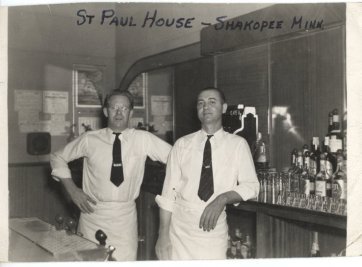
The St. Paul House, 111 Years in Business

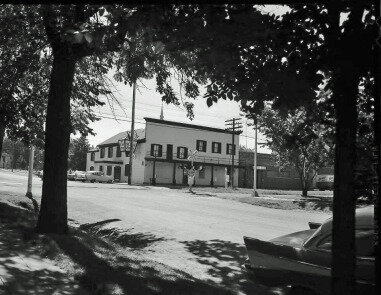
One of the oldest businesses in the county was the St. Paul House. Founded in 1854, the business operated for 111 years. During its long history it served many different roles, initially it was a railroad hotel and saloon. Eventually it transitioned to be a stagecoach stop. During the early 1900s the business changed hands several times. After years of being another saloon in town, it was bought and remodeled to be a hotel and restaurant in 1915.

 By 1936 the hotel received a major renovation by the new owner, Frank Wampach. The hotel had its appearance updated and had a bowling alley built. The St. Paul House was just one of many businesses in the county noted as being a Speak Easy and for having gambling machines. It wouldn’t be until the Shakopee’s police starting breaking up gambling dens that the machines were removed.

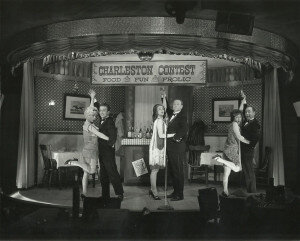
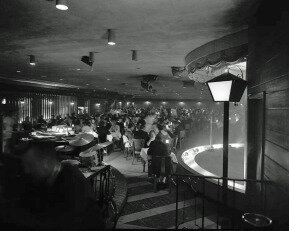
 In 1954, on the business’ centennial, the St. Paul house received on last remodel and also re-branded itself into the “New St. Paul House”. It was advertised as the same homey feel with modern style. The hotel also received its iconic, massive carriage house lantern. The St. Paul House has a stage where it performed dinner theater and other shows. Unfortunately, this updated restaurant would not last long. In 1965, the St. Paul House would burn down and the building was never restored.

Few businesses and buildings in Scott County have as long and storied history as the St. Paul House. Today, the Order of Eagle Aerie sits where the St. Paul House used to at 2nd and Fuller in Shakopee. Rare is a business that can survive 100 years and even beyond. Scott County is fortunate to have a prime example of such a business that was able to change and adapt with the changing face of the county.

Brick by Brick, the Blakeley Brickyards

The Blakeley area of Scott County is a beautiful area to visit and explore, but one of the things hidden away in this corner of the county is a history that helped build Minnesota

Ed Wards Brickyard from 1890s

 and the country as we know it today. This region of our county was once home to a thriving business of brick making. These bricks, formed from local clay and fired right here in Scott County would be loaded on trains by the ton to be used in buildings in the County,  Twin Cities, and across the county.

The late 19th Century saw a boom in construction across the country, industry was starting to take hold a main player in the American economy and the demands of the growing country required bricks to build factories, houses, and all manner of other construction. From the 1860s through the early 1910s the Blakeley area, including Belle Plaine, operated six different brickyards at various times through the period. At the peak of their production, this region of no more than 5 miles was producing nearly 60,000-70,000 bricks per day.

One of the first brickyards in the area was opened by I. N. Dean, the founder of Blakeley, in 1870. The brickyard employed dozens of men throughout the season and many made their way through the winter by helping prepare for the next season by cutting timber. The largest of the brick kilns in the area measured in at 35 feet long and 20 feet high, it was powered by cotton wood that was typically cut the winter beforehand.

The region had several brickyards which operated  throughout the years, the major yards were: Wiest and Daugs, Mierbachtol, Ed Ward’s, Peter Becker’s, Jacob Krenz’s, and Dean’s Yard. Dean’s would eventually be bought out in 1882 by A. Wiese and operated by Sam Kahn until it closed in 1914. These brickyards produced different kinds of bricks which served several purposes. Bricks made from yellow and blue clays created bricks useful for interior construction, while red or crème colored bricks served as exterior materials. Becker’s and Krenz’s produced crème and red bricks respectively with the rest producing mainly interior brick.

When all six yards were in production they employed between 200-300 people, and the average wages for a brickyard worker in the late 1800s was around 15 cents an hour. Brickmaking requires particular conditions, though, and production would shut down if it rained or when winter came. Many of the workers that didn’t migrate for the winter, would be employed to cut timber for the kilns for the coming season. An entire winter would be required to cut enough wood to feed the massive kilns. The kilns themselves would be firing 24 hours a day with people watching it constantly to ensure it maintained the required temperature. The bricks were made from a mix of sand, water, and clay and pressed into forms to be fired.

The brick business was booming in Scott County toward the end of the 19th century, orders in the range of 2 million bricks were being submitted annually from construction firms in the St. Paul and Minneapolis with others coming from as far away as New York. Many of the bricks which came out of Belle Plaine and Blakeley went into building some of the first brick buildings in the area, especially in Belle Plaine itself. Beginning in the 1860s, the Blakeley region and Belle Plaine were churning out bricks at blinding speed, but the 1890s would see a fast decline to the once booming industry.

In 1893, the country would experience a sudden and deep depression, the Panic of 1893. The economy would recover within a few short years, and it would be nothing compared to the depression which would come forty years later. Still, the Panic had driven many businessmen to halt construction of building and the demand for brick quickly began to fade. In 1894, Peter Becker’s yard for example had a surplus of over 2 million bricks due to canceled orders. The other brickyards in the area experienced similar hardships. Daugs and Wiest cut the cost of their bricks in half from $6 per brick to $3, but the writing was on the wall. Mierbachtol Brickyard was the first to close its doors from the decline in 1894, followed by Ed Ward’s and Daugs and Wiest the following year. The Becker yard continued for a few more years, with Jacob Krenz having closed in the late 1880s. The yard owned by A. Wiese, the first brickyard built in the area of Blakeley, did not close until 1914.

The late 19th Century was the height of brick making in Blakeley, and the area had a host of dedicated and quality yards. Producing between 60,000-70,000 bricks per day at the peak of production, the region helped built the state and the country at large. Unfortunately, like many industries at the time, the Panic of 1893 saw the end of the boom of construction and with it the decline of our local brickyards. While the yards closed in the late 1890s and some a little later, the bricks they produced can still be found in some old buildings today. What better testament to their quality and the hard work that produced them than to still be standing over a century later.

Breweries of Scott County in Prohibition

Prohibition was no a surprise to those who owned breweries. The tide of “Drys” were growing for years before 1920. In Scott County, most towns had a brewery that had to decide how to handle this transition. That is what this post is about, the Shakopee Brewery, Jordan Brewery, and New Prague Bottling Works.

Shakopee Brewery, 1907

Shakopee Brewery, 1907

Firstly, the Shakopee Brewery was a long established business in Scott County. At the time the brewery was owned by M. J. Doherty. While most breweries began the process of switching to a different industry, the Shakopee Brewery instead closed its doors for 16 years. It wasn’t until repeal in 1933 that the brewery was bought and rebranded as Northwestern Distilleries, opening in 1936 but only last for about 4-5 years before closing for good.

The Jordan Brewery, 1940

The Jordan Brewery, 1940

The Jordan Brewery during Prohibition was called Schultz and Hilger’s Brewery, and like the Shakopee Brewery, it was closed during Prohibition. However, the building of Jordan Brewery was used as a chicken hatchery. The space was rented from the owners, and after repeal the business reopened and began producing Jordan Beer.

New Prague Bottling Works had its own brewery that it maintained, and by the late 1910s was a thriving business. When Prohibition came about, the business transitioned to soda production and closed down its brewery building. When repeal came about the company never reopened its brewing business, instead it became a distributor for Scheel’s Beer.

Prohibition had impacts that are still being felt today. If you found this little piece of history interesting, come visit our Prohibition exhibit opening in April to learn more about Scott County in Prohibition.

Written by Dave Nichols, Curator