What's in Store?

We get donations from all across Scott County, and even beyond, but do you ever wonder what happens to the objects you give us afterward? Well you are in luck because that is what this blog post is about. The process of taking items into the collection in called accessioning, and entering them into our collection database is called cataloguing. One of our golden rules for items we take is “What is the history and how does it connect to Scott County?”, we don’t take copies of photos and we want to be sure that we have a good history for anything we take it. Starting to accession something requires the donor to sign over their ownership of the item to the Historical Society. Once all the paperwork is done, we begin the process of cataloguing the items.

Cataloguing has a few different steps to it, but all of them are pretty easy. Cataloguing an item starts by giving it a particular number. This number serves to tell us who gave it to the Historical Society, as well as which item in the system we should look for when we need it. The number is based on the donor, and then for each item they gave it proceeds in numerical order: 1, 2, 3, etc. We attached the number with a tag, or sometimes we use a special material that lets us write the number directly on the item. In most cases though we use a tag, it’s much easier to remove if we need it later.  After we give the object a number we enter into our database a description, dimensions, what we know about its history, connections to people and places, and finally, its storage location.

Storing historical artifacts is part space management, part chemistry, and part environmental sciences. Objects of all kinds are very particular about the kind of environment that is best for them. We have specially controlled storage rooms that keep the artifacts stable for as long as possible. Once we assign a space to an object, we begin boxing it or lining a shelf with foam to keep the artifact safe. As you can see, we have a lot of full shelves but very little space. Once the item is placed in storage, we check on it periodically to make sure it isn’t decaying or breaking down. Steps are taken to make sure items in our collection have the longest life span possible for the generations to come. When we put together new exhibits, we always search our own collection first for artifacts and stories of the people of Scott County.

collection-1.jpg
collection-2.jpg

The Magic of the Stereoscope

unnamed.jpg

We recently had a stereoscope and a few slides donated to our education programs. If you are unfamiliar with stereoscopes, they look like an old fashioned viewfinder, with a handle on the bottom and a stick coming out of the front. Slide a card into the slot, adjust the distance, and presto: you are treated to a 3D scene of a fairy tale or far away land.

Children love stereoscopes. They have the allure of seeming old and valuable, combined with the modern magic of 3D technology. In essence, stereoscopes were the virtual reality headsets of the Victorian age and they have maintained the ability to captivate audiences of today. Bring a stereoscope into a room full of first graders and they will eagerly gather around. The lucky student who gets the device will methodically look at slide after slide, accidentally smacking their neighbors with the handle as they remain lost in the world of yesteryear. This will continue until the pleas of their classmates to take a turn win out, and the stereoscope is transferred into another set of hands. Even safely in my thirties, I couldn’t resist looking at every slide that accompanied the stereoscope that was brought in last week.

For all of their glamour, stereoscopes are fairly simple. We humans have two eyes, each in a slightly different place. Each eye takes in our world at a different angle, and our agile brains combine those views into one sensible image. In other words, we always have stereoscopic vision. It gives us our ability to perceive the world in three dimensions. Without this knack, it would be very challenging to drive, catch a softball, or even thread a needle.

When you look through a Victorian stereoscope, you are viewing a card called a stereograph on which two slightly different photographs of the same scene are printed. The stereoscope forces each eye to take the pictures in through a separate glass lens. These lens are focused inward, forcing your eyes to combine the images at a single point. Add in our brain’s natural 3D powers, and voila: you see an illusion of depth.

Stereoscopes were one of the great fads of the past. The ability to create a stereoscopic illusion was first documented in 1838 by the British scientist Charles Wheatstone. His writings on the ocular trick were interesting, but not much was done with them for another decade. Then, scientist David Brewster refined the design, crafting a hand-held device you could raise to your eyes. This device, combined with the newfangled invention of photography, created a stereoscopic fad that swept the world. By 1856, the London Stereoscopic Company had a catalog of over 10,000 stereograph cards available for purchase. Six years later, their listings had grown to over a million.

Stereoscopes were marketed as a way to bring families together. Advertisements showed grandchildren and their elders smiling as they enjoyed their parlor stereoscopes. They were also billed as a way to view the mysteries and wonders of the world without leaving the comfort of your living room. In a time without the internet, televisions, and even widespread to access volumes of photography, the stereoscope must have truly seemed like a doorway to the globe.

These wonders did not stay in the home. By the late 1800s, stereoscopes were being aggressively marketed to schools. Like the educational technology and gaming companies of today, stereoscopes were pitched as a way to make the doldrums of learning adventurous and fun to pupils. It was said that by learning through a stereoscope, the chaotic or unfocused child would be shielded from the distractions of the classroom. The American stereoscope company Keystone developed a stereoscope based curriculum known as the Keystone system. Soon, the company claimed that every American city over 50,000 was using the Keystone system to teach pupils in their public schools.

As always, some spectators of the stereoscope fad were alarmed. They worried that the stereoscope would replace books, and students would come out of school only able to learn through a series of images rather than mastering the complex skills of reading and writing.

Eventually the fad waned. This was not due to the consternation of educational naysayers, but because it was replaced by a new parlor novelty: the radio.  In spite of this, the technology was not left behind in this craze of the past. Stereoscopic vision has periodically resurfaced in trends, from the red and blue 3D movie glasses of the 1950s, the headache-inducing magic eye books in the 1990s, and finally in the 3D video games of today. The magic of stereoscopic vision seems here to stay.

At the Scott County Historical Society our collections feature many stereographs, the dual image cards that make the magic of stereoscopes appear. Some were owned by county residents, transporting them to far away places. Others show scenes closer to home depicting neighbors or local buildings. Still others tell scandalous stories or humorous tales. If you are interested in trying a stereoscope for yourself, stop by and ask! We will pull it from it’s home in the education closet, and give you the chance to step into another world.

Below are a few of the stereographs that have a home in the SCHS Collections.

 

Black and white albumen stereograph showing the interior of St. Peter’s Episcopal Church in Shakopee.  1893

Black and white albumen stereograph showing the interior of St. Peter’s Episcopal Church in Shakopee. 1893

Black and white stereograph of a portion of the Grand Canyon at Yellowstone National Park. The stereograph is titled “A More Enchanting Wonder Nature Never Knew – Grand Canyon of the Yellostone National Park, Wyo., U. S. A.”. Appx. 1900.

Black and white stereograph of a portion of the Grand Canyon at Yellowstone National Park. The stereograph is titled “A More Enchanting Wonder Nature Never Knew – Grand Canyon of the Yellostone National Park, Wyo., U. S. A.”. Appx. 1900.

Black and white stereograph of a man and a woman in an office. The woman is sitting at a desk, the man is sitting at a roll-top desk next to the woman. The man has one arm around the woman’s shoulders and both are looking up in surprise. A third wom…

Black and white stereograph of a man and a woman in an office. The woman is sitting at a desk, the man is sitting at a roll-top desk next to the woman. The man has one arm around the woman’s shoulders and both are looking up in surprise. A third woman, presumably the man’s wife, is standing at the door. She is angry at having caught the couple together and is preparing to throw her hand fan at them.The scene is staged and is one is a series of slightly salacious stereographs. The piece is titled “The Unexpected Always Happens.” Appx 1900

Colorized stereograph showing the Horikiri Iris Garden in Japan. Appx, 1900

Colorized stereograph showing the Horikiri Iris Garden in Japan. Appx, 1900

Colorized stereograph showing the Red Room in the White House. Appx 1900

Colorized stereograph showing the Red Room in the White House. Appx 1900

Black and white albumen stereograph of Henrietta Deutsch and Julius Coller, II, residents of Scott County. Handwritten in pencil on the backside of the image is “Dec 10 – 1913/Henrietta Deutsch/Jac Coller”

Black and white albumen stereograph of Henrietta Deutsch and Julius Coller, II, residents of Scott County. Handwritten in pencil on the backside of the image is “Dec 10 – 1913/Henrietta Deutsch/Jac Coller”

Black and white stereograph showing a comical scene of a woman preparing to shave a man’s face. The scene is staged. The piece is titled “The “New Woman” Barber.” Appx 1900

Black and white stereograph showing a comical scene of a woman preparing to shave a man’s face. The scene is staged. The piece is titled “The “New Woman” Barber.” Appx 1900

Written by Rose James, SCHS Program Manager

Reflecting on my semester internship

Hi, my name’s Kaleb, and I’m a Shakopee CAPS digital design student who interned here at Scott County History for my final semester in High School.

Starting my final semester of high school was intimidating. On top of that, starting my first ever graphic design internship piled it high. Scott County History was my first choice out of the three internships I interviewed for, and I’m so glad that I was chosen to learn and grow as a designer and a professional here. I’ve been able to work on projects that I love like logo design; I’ve also learned to enjoy the simplicity of other projects like social media ad templates, and I’m extremely grateful for it. I’m grateful to Kathy for choosing me to work on the projects she’s given me, and the opportunity to experience the responsibilities of a professional working in the graphic design field.

To get side tracked, I’d like to list three things that I’ve found out through this internship:

  1. Mr. Blue Sky by Electric Light Orchestra is a great song to get me in a good mood to work hard

  2. It’s inspiring and heartwarming to know that there are people in the community who come in and work or volunteer to preserve our history and show it to others

  3. Knowing that you’re doing something to help others is rewarding and I think everyone should do it.

Everyone at the Historical Society are nothing but nice, will always greet you with a friendly attitude, and made the environment delightful. I’d like to thank everyone that I’ve met here for being kind and making my day start off with a smile. I’d also like to thank Shakopee CAPS and Kathy, once again, for giving this opportunity that I will take with me next year to college, and to my future career.

This fall, I’m going to be attending the Minneapolis College of Art and Design for animation, which isn’t marketing or graphic design, but doesn’t mean that this internship didn’t help me make this choice. It has changed how I view my future, in a good way, and was definitely a stepping stone in the right direction.

Thanks for these five months, they’ve been a great learning experience for me.

Sincerely,

Kaleb Cardona


To Honor Mom

Mother’s Day can be filled with flowers, candy, presents, hugs, sticky kisses, longing, and sadness.  Setting aside a special day to celebrate mothers has a long and somewhat painful history.  Ancient Greeks and Romans held festivals to honor the mother goddess, and early Christians celebrated a festival known as “Mothering Sunday”, however, it was death, poverty, and war that brought Mother’s Day to a national holiday.

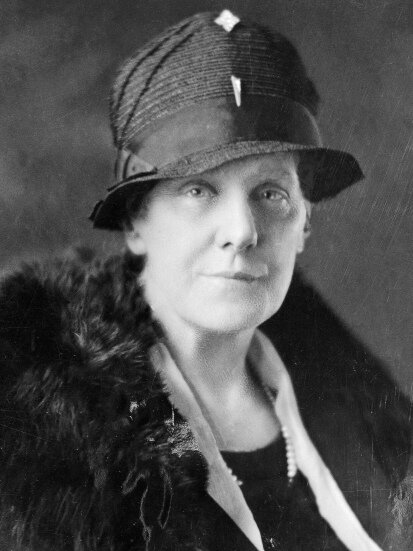
Modern Mother’s Day began as a political and social peace movement.  In 1868 a “Mothers Friendship Day” was organized by Ann Jarvis* for mothers to gather with former Union and Confederate soldiers to promote reconciliation. She stated the purpose of the day was to:

annajarvis.jpg

To revive the dormant filial love and gratitude we owe to those who gave us birth. To be a home tie for the absent. To obliterate family estrangement. To create a bond of brotherhood through the wearing of a floral badge. To make us better children by getting us closer to the hearts of our good mothers. To brighten the lives of good mothers. To have them know we appreciate them, though we do not show it as often as we ought… Mothers Day is to remind us of our duty before it is too late. This day is intended that we may make new resolutions for a more active thought to our dear mothers. By words, gifts, acts of affection, and in every way possible, give her pleasure, and make her heart glad every day, and constantly keep in memory Mothers Day.

Abolitionist, pacifist, author, and suffragette Julia Ward Howe wrote a Mothers’ Day Proclamation in 1870, calling mothers to unite in promoting world peace.  In fact, she and other antiwar activists called for a Mother’s Peace Day to promote unity after war.  She believed women bore the loss of human life more harshly than anyone else.

The official observance of Mother’s Day is due to Anna Jarvis (Ann R. Jarvis’s daughter).  Anna pushed the efforts for an official Mothers’ Day after the death of her Mom, to honor her mother and the sacrifices mothers made for their children.  Her idea was to set aside a day for children to celebrate their Moms, and remember the work of peacemaking, reconciliation, and social action against poverty.**

She also argued that most national holidays were biased toward men’s achievements, so she started a letter writing campaign.  By 1912 many towns and states adopted Mothers’ Day as an annual holiday and by 1914 President Wilson officially established the second Sunday in May as Mothers’ Day.

Side note: originally the holiday was intended as a day to recognize women’s activism – the organized social and political action by all mothers. The apostrophe was moved so the original intent of Mothers’ Day, became Mother’s Day to emphasize women’s role in the home and family; a day to celebrate the service of your own mother.

Although she never married or had children, Anna Jarvis envisioning people wearing a carnation (colored if your mom was living, white if she was not***), as a badge and attend church services.  However, once it became a national holiday – it became heavily commercialized.  Anna spoke out against people buying items; she wanted to protect the day and filed lawsuits against groups that used the “Mother’s Day” as a slogan for sales.  “To have Mothers’ Day the burdensome, wasteful, expensive gift day that Christmas and other special days have become, is not our pleasure,” she wrote.  “If the American People are not willing to protect Mothers’ Day from the hordes of money schemers that would overwhelm it with their schemes, then we shall cease having a Mothers’ Day …” Eventually, she went broke using her money to battle the holiday’s commercialism. By her death in 1948, Anna – the Mom of Mothers’ Day – had completely divorced herself from the holiday and lobbied to have it removed from the calendar!

However you celebrate Mother’s Day or Mothers’ Day – we wish all moms peace and happiness, and thank you for your sacrifices.

Better One? or Two?

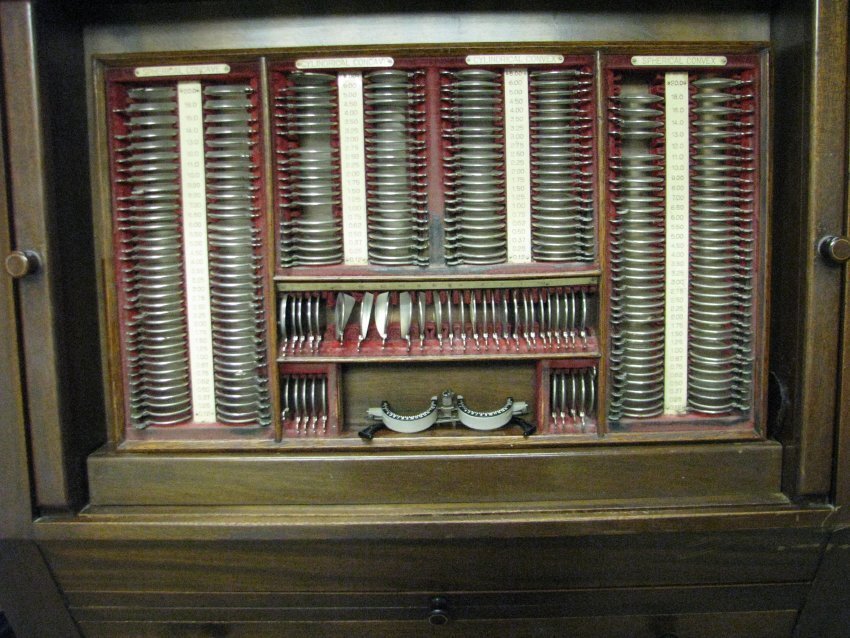
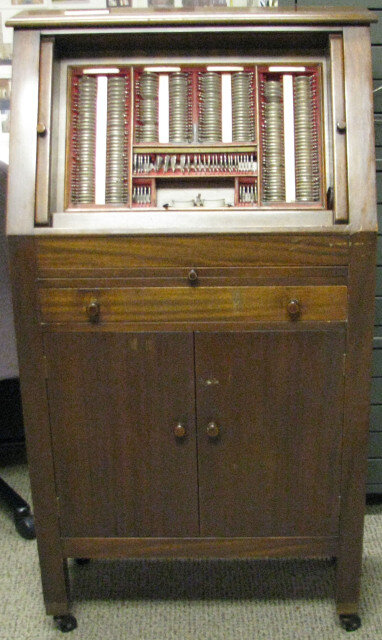
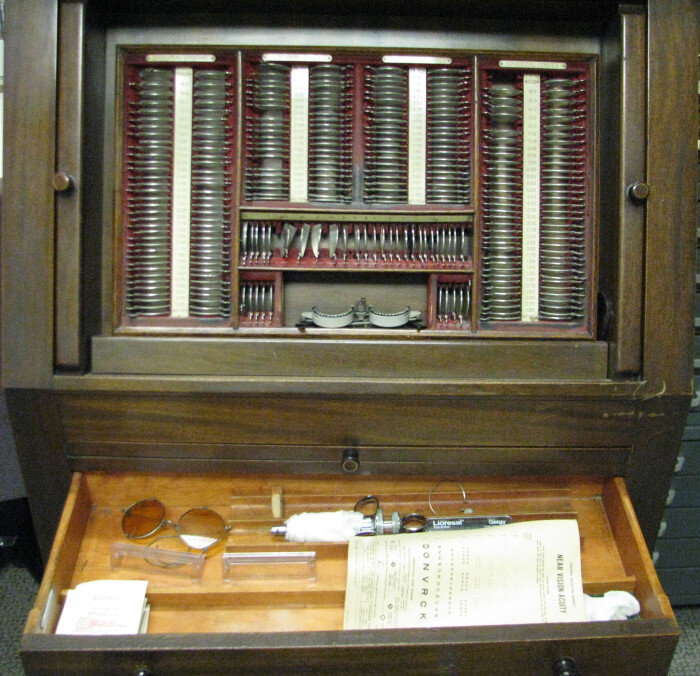
A couple of weeks ago the Scott County Historical Society was lucky enough to have donated a unique piece of medical history. Before the days when you could go to a Pearle Vision, you had to have your eyes test the old fashion way, enter the Trial Lens Case. This massive case has been used by a few different doctors throughout the years in Belle Plaine. The case comes with dozens of removable lenses that are placed in a pair of frames to measure what strength of glasses you need.

According to what we could learn, this case was first purchased in 1927 by Dr. Herman Jurgenson, who then gave it to Dr. Roger Hallgren when he retired. The case changed hands many times, even at one point being used as a stand in the doctor’s office. This is a wonderful piece of the past to help show how far we have come in such a small time. Its objects like this that make history fascinating, imagine that less than a century ago this was how you got your glasses measured and fitted. Medicine in all fields has changed so much, it is good sometimes to look back and consider where we have come from. Now if you will excuse me, I need to see if I can find the right lenses for my poor eyes.